PinBrief

Brief news, pinned to your place

Show HN: Is It Greg?

Show HN: Is It Greg?

On Hacker News, a user submitted a Show HN entry titled “Is It Greg?” The post invites the community to view and discuss the creator’s work, following the platform’s practice of showcasing new projects, tools, or experiments. The submission is classified under the technology category, reflecting its relevance to software or digital development and innovation.


The case against JPEG XL

The case against JPEG XL

A recent discussion on Hacker News examines the arguments opposing the JPEG XL image format. Critics point to limited browser support, concerns over complexity, and the existence of alternative formats like AVIF and WebP that already have industry backing. The thread also highlights potential patent risks and questions whether JPEG XL’s claimed benefits outweigh the costs of transitioning existing workflows.

AI is not a normal technology

AI is not a normal technology

An article on Hacker News argues that artificial intelligence differs fundamentally from conventional technologies. It points out AI’s capacity to learn and evolve autonomously, its rapid advancement, and the broader societal and ethical implications that set it apart. The piece suggests that policymakers, developers, and users should treat AI with distinct frameworks rather than applying standard tech norms.

Open-Source AI and Open Models Reading List

Open-Source AI and Open Models Reading List

An article shared on Hacker News compiles a reading list focused on open‑source artificial intelligence and publicly available model architectures. It gathers links to research papers, code repositories, tutorials, and community discussions that explore the development, deployment, and ethical considerations of open AI tools. The list aims to help developers and researchers stay informed about emerging open‑model ecosystems.

Apple's Dimensional Drawings

Apple's Dimensional Drawings

Apple's Dimensional Drawings introduced a feature named Dimensional Drawings, enabling three‑dimensional sketching or design, discussed on Hacker News. The post highlights its potential uses for developers and designers, notes integration with existing Apple software, and mentions early impressions of performance and usability. The conversation centers on how it may impact creative workflows and its compatibility with iPadOS and macOS platforms.

Registration without a phone number on Signal will use zero-knowledge proofs

Registration without a phone number on Signal will use zero-knowledge proofs

Signal will let users register without a phone number by using zero‑knowledge proofs. The new method verifies identity while keeping personal data private, reducing reliance on phone numbers. The change follows user demand for anonymity and fits Signal’s privacy focus. Developers must integrate the protocol, and the feature is slated for release soon in the next few weeks.

Claude Fable 5.1 Solves the Cyphral Distich, a 370-year-old cipher

Claude Fable 5.1 Solves the Cyphral Distich, a 370-year-old cipher

Claude Fable 5.1, a new cryptographic tool, has cracked the Cyphral Distich, a cipher created 370 years ago. The software applies advanced pattern‑recognition and brute‑force techniques to decode the long‑unsolved puzzle, revealing its hidden message. The breakthrough demonstrates the power of modern algorithms in solving historical cryptographic challenges and could inform future research in code‑breaking.

Flawed Routers Flood University of Wisconsin Internet Time Server (2003)

Flawed Routers Flood University of Wisconsin Internet Time Server (2003)

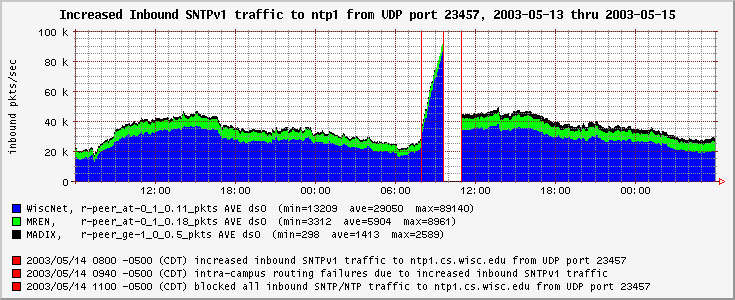
In 2003, a vulnerability in certain routers caused a flood of traffic that overwhelmed the University of Wisconsin’s Internet Time Server. Attackers exploited the flaw to send excessive packets, disrupting the server’s ability to provide accurate time services. The incident highlighted the importance of secure router configurations and prompted updates to mitigate similar denial‑of‑service attacks.

Mullenweg has returned as CEO after attempted board ouster

Mullenweg has returned as CEO after attempted board ouster

Automattic co‑founder Matt Mullenweg has resumed his role as chief executive after a brief period when the board tried to remove him. The dispute over company direction was settled through internal talks, with investors backing Mullenweg, allowing him to retain leadership of the open‑source and publishing platforms, including WordPress.com. The attempted ouster was reversed, and Mullenweg will continue to guide product strategy and community initiatives.

Mark Zuckerberg: "Cambridge Analytica" (2017)

Mark Zuckerberg: "Cambridge Analytica" (2017)

In 2017, Facebook CEO Mark Zuckerberg discussed the Cambridge Analytica data‑scandal during a public appearance. He acknowledged the company’s role in the misuse of user data and outlined steps to improve privacy controls and transparency. The incident highlighted concerns over data protection and the influence of social media on elections. The company also pledged to strengthen its policies and cooperate with regulators.

There Is No AI (It's Just People) with Jaron Lanier

There Is No AI (It's Just People) with Jaron Lanier

Jaron Lanier discusses that AI is essentially human‑created systems, emphasizing that the intelligence we attribute to machines is actually the result of human design and data. He argues that calling it AI is misleading and that we should focus on the human contributions behind algorithms. He warns about overhyping AI capabilities and calls for more transparency and accountability in AI development.

Global Shortage Has Led to Motor Oil Rationing at Costco

Global Shortage Has Led to Motor Oil Rationing at Costco

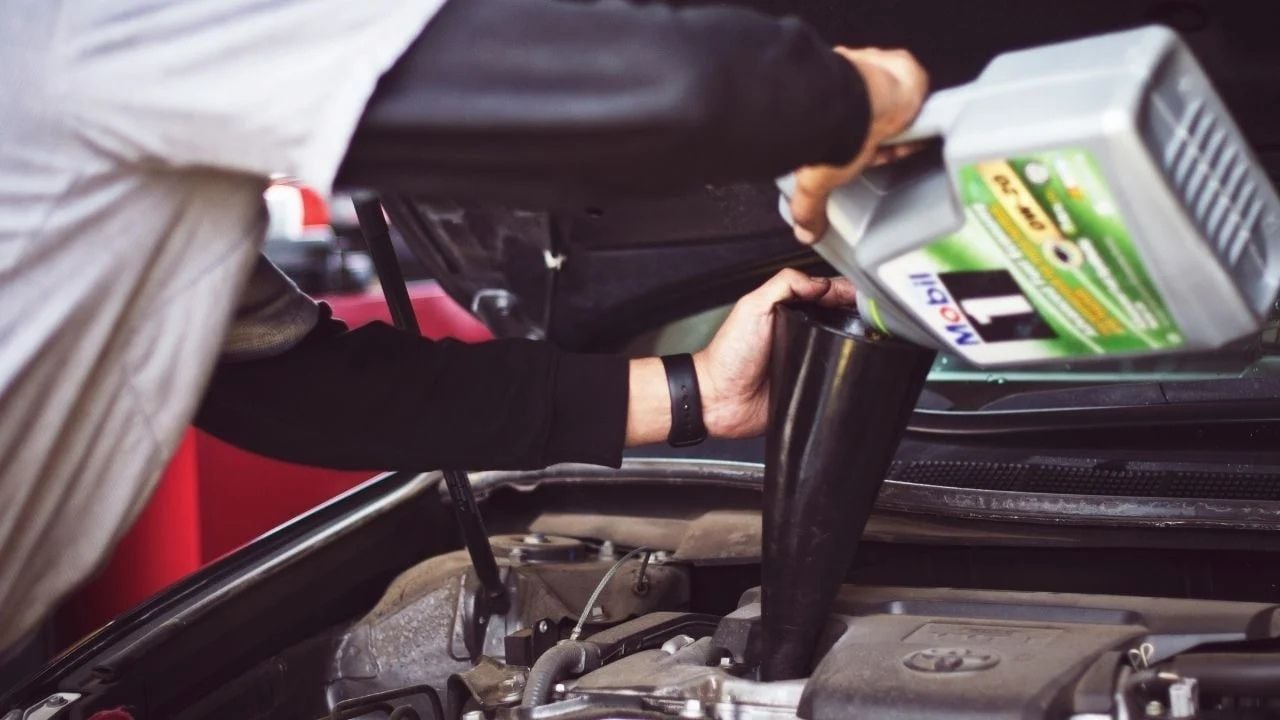
A worldwide shortage of motor oil has forced Costco to implement a rationing system for its customers. The retailer is limiting the amount of oil each shopper can purchase to ensure supplies last longer. The move follows reports of supply chain disruptions and increased demand, prompting stores to manage inventory more tightly. Shoppers are advised to plan ahead and check availability before visiting.

Why is Google still serving dodgy ads?

Why is Google still serving dodgy ads?

Google continues to display questionable ads because its ad‑verification system relies heavily on automated filters that miss subtle policy violations. The company prioritizes revenue from advertisers over strict enforcement, leading to loopholes that allow misleading or inappropriate content. Recent investigations show that the platform’s reliance on third‑party validators and limited human review contributes to the problem.

Romania soccer introduces black card to 'combat abusive behaviour' from parents

Romania soccer introduces black card to 'combat abusive behaviour' from parents

Romania's football federation has launched a new disciplinary tool, the 'black card', aimed at curbing abusive conduct by spectators, particularly parents of youth players. The measure allows officials to immediately remove offending individuals from matches and ban them for a set period. The initiative seeks to improve safety and sportsmanship at grassroots games across the country.

‘Too little, too late’: Critics perplexed and suspicious of AI leaders’ call for a slowdown

‘Too little, too late’: Critics perplexed and suspicious of AI leaders’ call for a slowdown

Anthropic’s chief executive has urged a pause on advanced AI development to improve safety, prompting a wave of criticism from former Trump administration officials, AI researchers and industry observers. Critics argue the proposal is either too modest, poorly timed, or serves corporate interests, and they express skepticism about its effectiveness in addressing broader emerging risks.

David Sacks: OpenAI and Anthropic Don't Need Regulations to Pace Frontier Models

David Sacks: OpenAI and Anthropic Don't Need Regulations to Pace Frontier Models

Entrepreneur David Sacks argues that companies such as OpenAI and Anthropic can self‑regulate the development of advanced AI models without external rules. He says competitive pressures and internal safety protocols are sufficient to manage risks, and that imposing regulations could hinder progress. Sacks emphasizes market dynamics as the primary mechanism for pacing frontier AI development.

Garry Tan wants US open-weight AI labs to 'distill' frontier models, too

Garry Tan wants US open-weight AI labs to 'distill' frontier models, too

Venture capitalist Garry Tan has urged American open‑weight artificial‑intelligence research labs to begin creating distilled versions of the latest large‑scale models. He argues that making smaller, more efficient copies of frontier AI can broaden access and reduce costs, similar to practices already common in closed‑source settings. Tan’s call targets labs that publish their code and weights publicly.

Predictive intelligence to anticipate anything.

Predictive intelligence to anticipate anything.

An article shared on Hacker News discusses a predictive intelligence system that claims to anticipate a wide range of outcomes. The technology reportedly leverages advanced algorithms to analyze data and forecast future events, aiming to improve decision‑making across sectors. The piece outlines potential applications, challenges in accuracy, and the broader implications for modern AI‑driven forecasting.

Cpak – OCI application package format for Linux desktops, servers and devices

Cpak – OCI application package format for Linux desktops, servers and devices

CPak is a new application packaging format built on the Open Container Initiative specifications. Targeted at Linux, it aims to bundle software for use on desktops, servers and embedded devices with a single, consistent method. By leveraging OCI standards, CPak seeks to streamline distribution, improve compatibility across varied Linux environments, and simplify deployment workflows for developers.

CUDA for AMD on Windows

CUDA for AMD on Windows

A thread on Hacker News highlights a new effort to enable CUDA, NVIDIA’s GPU computing platform, to operate on AMD graphics cards under Windows. The initiative seeks to provide a compatibility layer that would let developers run CUDA applications on AMD hardware, expanding the range of devices that can execute CUDA code without requiring NVIDIA GPUs.